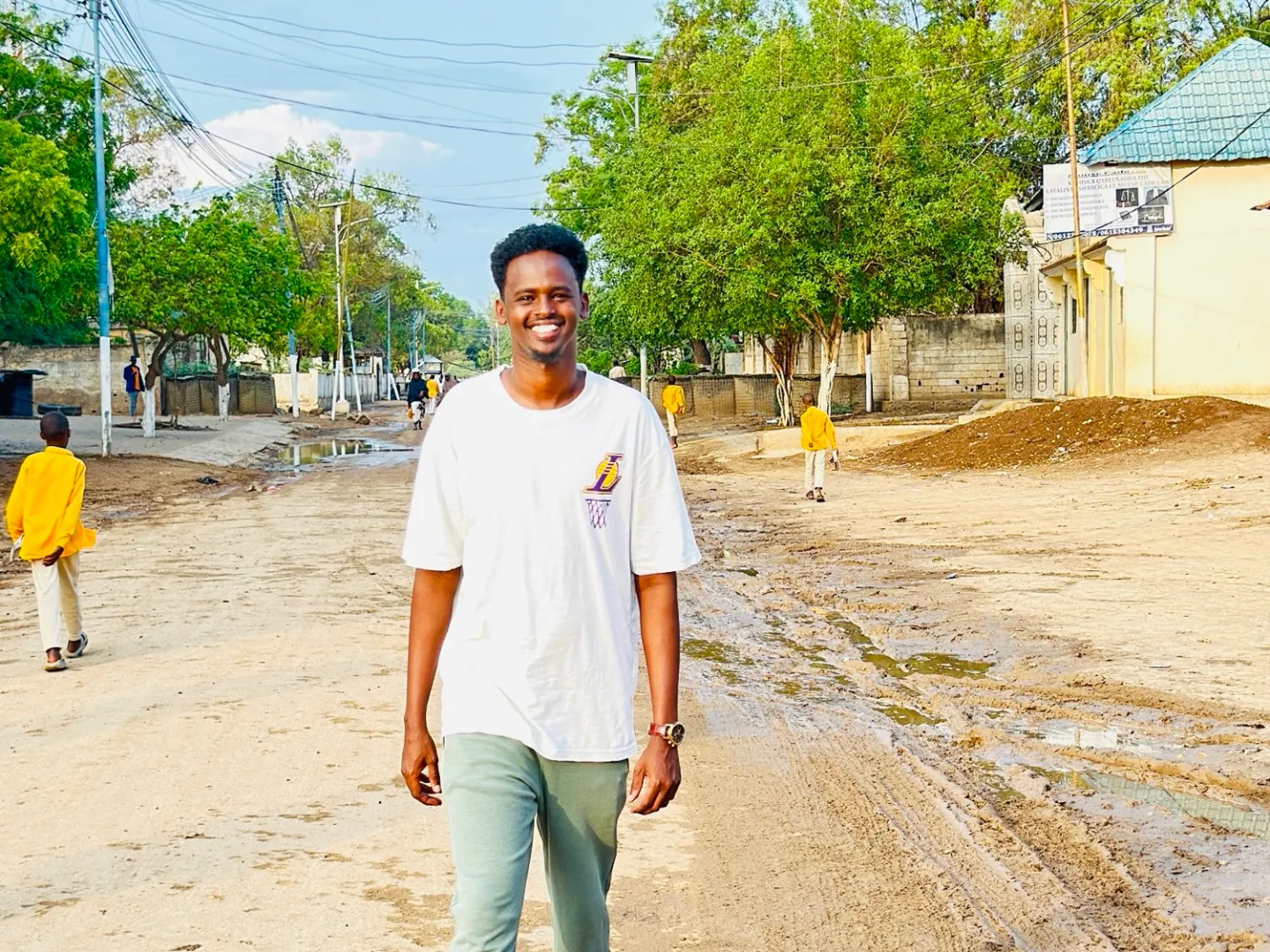
In early October 2024, I traveled to Jowhar. It was not my first visit; I had been there for ten working days in 2023. So, I arrived with a better understanding of Jowhar.
For those who don’t know, let me give you a brief. Jowhar is the interim capital of Hirshabeelle State the youngest of all Somalia’s federal member states. It is a riverine city, one of the oldest cities in Somalia, and the capital of the Middle Shabelle region. it is where famous Somali Sugar Factory is located, which used to hire over 4,000 people. Jowhar is known for its white rice, locally called Bariis Baarey. It has one of the best sayings/proverb: “Akhiro jano ka joog adduuna Jowhar ka joog.” This roughly translates to “In the hereafter, stay in paradise; in this world, stay in Jowhar.”
Arrival at Mohamed Dheere Airstrip
My plane landed at Mohamed Dheere Airstrip. My friend Shariif was already there. He was ready to take me into the city. October is usually the rainy season, but this year, it was unusually dry and drought-prone. Despite the lack of rain, the farmers prepared their fields, their hope for rain never wavering.
I asked Shariif,” farmers prepared the fields with such optimism. Were they sure the rain would come?” He smiled and replied, “Farmers always live with hope. Even if the rain doesn’t come, they prepare the fields anyway.” The weather was harsh, but growing up in Balanballe taught me how to thrive in harsh environments.
Jowhar is a vibrant city, home to a diverse mix of people, including those with Ethiopian and Eritrean roots. I had the opportunity to meet a lady with an Eritrean grandmother and a man with an Ethiopian last name. All Somali clans live here. The locals proudly call themselves Reer Jowhar Asal Ah. This phrase roughly translates to “true people of Jowhar.” And that is the only identity that unites them. The city has deep spiritual roots in Sufism, with annual gatherings to honor deceased scholars (ulama). This practice took me back to my childhood when my grandmother gathered us to pray for our ancestors. She sometimes slaughtered goats or sheep, and we had to spend Friday nights reciting the Quran and doing Dhikr together.
What truly caught my eye were the old buildings, each with its unique architecture and the strong sense of community and family bonds that still exist.
Old days of Jowhar
During my stay, I got to meet one of the legends of Jowhar. Here is what I quoted.
“Jowhar was used to be home for all Somalis,” he added. “People supported each other because they were all born and raised in the same town. When someone went abroad, especially to Saudi Arabia, for work, another Reer Jowhari person would welcome them and help them find jobs. The only bond was that we came from the same hometown. But things changed after the Civil War. People started asking about each other’s clans,”
He continued. “Some didn’t even know their clan identity before. They only knew themselves as Reer Jowhar. Many had to leave the city because their families warned them they would be targeted. People began asking strange questions like, ‘How can one of our Reer Jowhar be Daarood or Marehan? How did others become Isaaq?’ The most common question became, ‘Hebel Yuu Noqday?’ which clan he/she ended up in.”

Somali Mudul outside of Jowhar
Humanitarian Challenges
Jowhar and the entire Middle Shabelle region face serious humanitarian challenges. The World Bank-funded Damal Caafimaad project was an important health service delivery initiative. It was suspended due to disputes between the implementing partner and the state administration.
This situation left many people in Middle Shabeelle Region without access to essential health services including Jowhar general hospital. I thought about this situation. I recalled the Quranic verse: أَلَيْسَ مِنكُمْ رَجُلٌ رَّشِيدٌ “Is there not among you a man of reason?” I wondered why healthcare has been politicized and why in disputes. How can lifesaving involve personal gains and personal interests? I am assuming it is personal gain there. Imagine the closure of more than 50 health facilities that serve thousands of vulnerable communities in Middle Shabeelle? Some of the areas are newly liberated. For over 15 years, they did not get vaccines and other healthcare services. This situation leaves the community to suffer. During my stay, I saw a 7-year-old boy who died of malnutrition in Xawaadley district, 30km away from Jowhar. I assumed he would have survived if this project had not been suspended. Unfortunately, that did not happen. Hundreds of others are suffering the same fate, specifically mothers and children.

In Xawadley, a 7-year-old boy died from malnutrition, photo taken by Hussein Mohamed Ali
Security in Jowhar
It is expected to see nonuniformed men with guns in Jowhar, but it’s not as alarming as it might seem. Those are Macawisley, local militias fighting against Al-Shabaab. Seeing so many armed individuals can feel unsettling for newcomers unfamiliar with the city.
The downside of arming Macawisley is that if clan clashes break out—God forbid—there are enough weapons to sustain fighting. There are enough weapons in the city to sustain fighting for days. This is one of the unintended consequences of arming Macawisley. Weapons are in the hands of civilians, but overall, people are vigilant, security first, and against AS. I remember an incident when a stranger worked for an aid organization. He was alone and unfamiliar with the locals. Because of this, he was temporarily detained.
Jowhar’s infrastructure is a significant challenge. Most roads are poorly maintained, dating back to the Siad Barre era. Building new homes is difficult because construction materials, like stones, are hard to access. Luxury houses are lacking in Jowhar. As a result, state officials rarely stay long in Jowhar. They visit only for specific events like conferences or audits.
The People of Jowhar
Despite the challenges, Jowhar’s greatest treasure is its people. They are warm, hospitable, and eager to share stories about their city. They don’t hesitate to critique newcomers. This is especially true for those who arrived in the late ’90s with divisive attitudes or clan-based mindsets.
For coffee lovers, Abukar’s coffee shop is a must-visit. Located opposite the iconic Todobada Geed (Seven Trees), Abukar serves the best coffee I have ever had. His small, humble shop is a gathering place for all of Reer Jowhar.

Jowhar is one of the few cities in Somalia where Somali shillings are still widely used. This serves as a reminder of their simplicity and cost-effectiveness. Every morning, people head to their fields. They return with carts full of fresh fruits and vegetables. They sell these in the market or use them at home.
Fridays in Jowhar became my favorite. A group of us head to the farms along the Shabelle River. We sit under mango trees and sing old Somali songs. We share stories and enjoy the beauty of nature.
I interacted with many local government officials, district authorities, and youth groups during my three-month stay. Their hospitality was unmatched.
In Jowhar, life moves at a relaxed pace. The phrase “Tartiibtaada,” meaning “at your convenience,” is common. No one is in a rush. Even if you’re late or make a mistake, you won’t face anger or yelling.
If you want to experience the beauty of Somali culture, visit Jowhar. Experience the strength of its communities. Jowhar is ready to welcome you with open arms.

Friday outing.